
-
The fear of what lies beneath is often more constructed than real — The mind frequently tells us we will not be able to handle what we feel, when in truth the willingness to feel is often less overwhelming than the energy spent avoiding it.
Beneath the surface emotion often lies something asking to be known — A need, a wound, a truth. A part of us that has been waiting to be met.
The courage to feel looks different for each person — It is shaped by what we are carrying and the resources we have available, and no one else can define what it should look like for you.
What we might be protecting ourselves from
Recently, both in my professional work and my personal life, I have recognized something that might lie beneath the surface for a lot of us in response to complex emotions. A notion within that communicates, “don’t feel that too deeply, you might not be able to handle that, if you let yourself go there you might not come back.”
This isn’t irrational, as many of us might have learned over time that some feelings are too much or too heavy to confront — or even too much for the people around us to receive. Understandably so, we develop strategies that keep those feelings at a manageable distance (i.e. intellectualizing, staying busy, coping with reactions as opposed to getting to the root of things). Maybe this has become so automatic, that in the present, we might not even recognize that it is happening and we avoid and deflect as a knee jerk reaction to discomfort.
As someone appreciates the opportunity to lean in, even when difficult, this Mindful Monday is centered on what happens when we meet the feelings that we might instinctually turn away from. What I am focusing on today is what can occur when we meet our emotional complexity with courage and attentiveness — and observe what gifts await when we attempt to lean in. I am inspired by one of my clients who recently shared in session:
“What I thought would break me, I was actually able to sit with. I became more flexible in the face of the pain but I had assumed the feelings would make me feel trapped.”
Do you fear your own emotions?
We are starting with emotions, and fear of them, as I observe that this fear is at the heart of what keeps many of us on the surface of our own experiences. I don’t believe that we are truly afraid of our emotions, rather we might be afraid of what we have told ourselves our emotions will do to us.
We might be afraid of being overwhelmed, crying and not being able to stop, of discovering that the sadness is deeper than we realized, or the grief is less resolved than we had hoped, that our feelings will swallow us whole. These fears are both understandable and, in retrospect, constructed. Our minds, at times, have a tendency to amplify what we have not deeply observed and keeping things at a distance for a long time, our imagination will fill gaps with worst case scenarios. The longer that we avoid something, the more our avoidance confirms that it must be too much to handle. If you relate to this so far, you might even recognize that when “the thing” is actually confronted, it’s rarely as catastrophic as you had imagined.
This doesn’t mean that the feeling is not real, or that it won’t be hard to confront. It means that the catastrophic story we might have been telling ourselves is not the whole truth.
What lies beneath
How is your inner world organized?
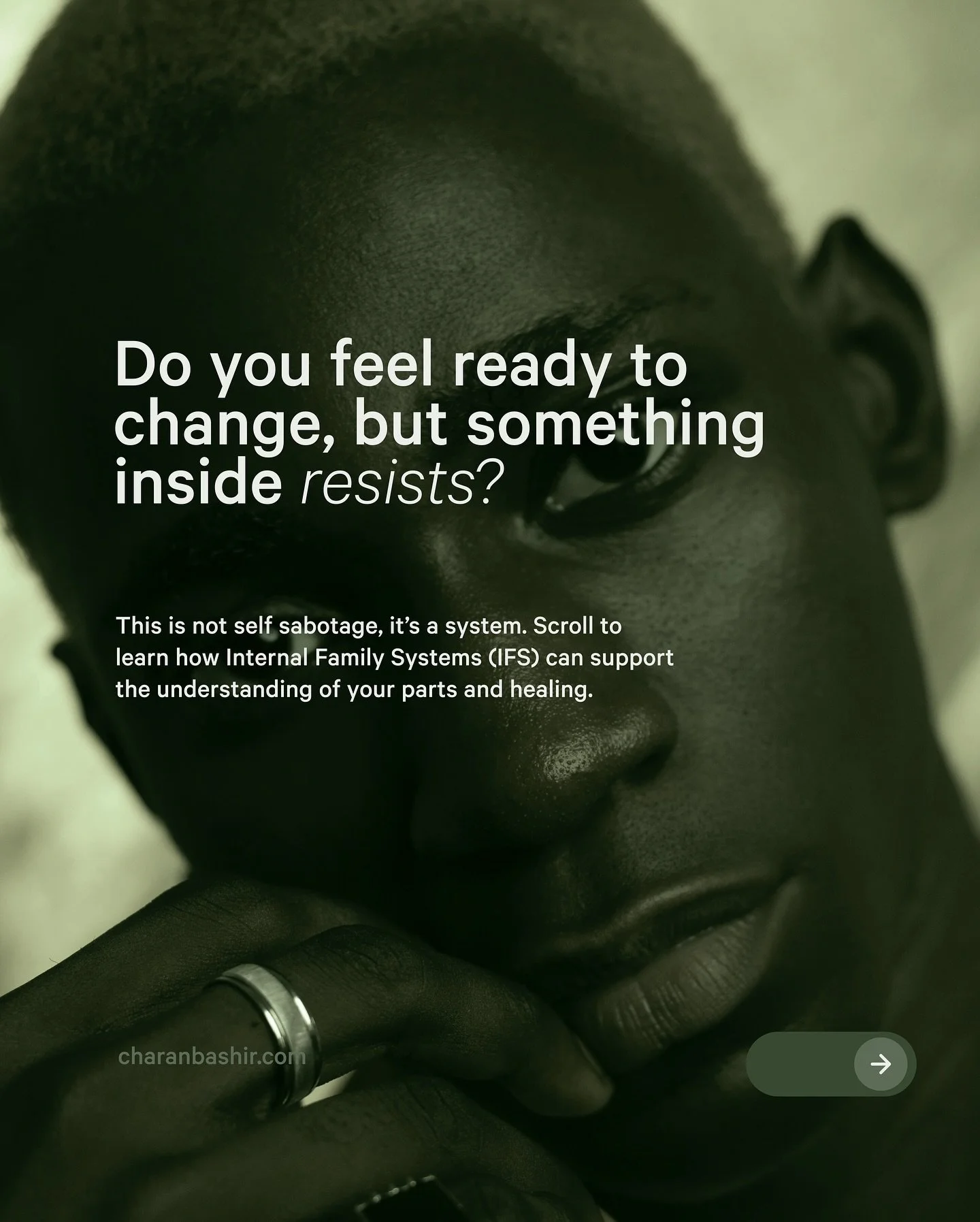
Dr. Richard Schwartz, the developer of Internal Family Systems (IFS), offers a framework that we have explored in previous Mindful Monday’s. IFS states that we as people are comprised of multiple parts, each with its own perspective, history, and role. Some parts hold vulnerable, wounded experiences from earlier in our lives and others organize themselves around shielding those wounded parts from further harm — in this framework, these parts are called our protectors.
In practice, this means that the surface emotion we feel in any given moment (i.e. anxiety, irritation, restlessness, overwhelm) are often protective parts doing their job. It’s trying to keep us from making contact with something beneath it. This is, often not always, why simply focusing on coping with what is showing up is addressing the protective reaction, but not actually the part that needs care.
For example:
Imagine a person struggling with chronic low-grade anxiety that follows them through their days. They have tried the surface level strategies (i.e. breathing exercises, cognitive reframes, scheduling, to do lists) and they are useful but the anxiety keeps returning. If this person asked, “What is this anxiety protecting me from?”, what would change about how they confront it?
In my work, what I often recognize is that people notice something beyond the initial feeling that is troubling them. This may be a form of grief, fear, a memory even — the recognition that a part of them is engaged, in anxiousness for example, as a form of protection from true confrontation of the self and what is being held. I recognize anxiety is not the problem, it is just a metaphorical guard at the door of something more vulnerable. At the risk of making sweeping generalizations, no amount of coping with the metaphorical guard will address what is behind the locked door. This is why I believe that the willingness to feel deeply matters. It does not mean that every uncomfortable feeling conceals a deeper wound, but sometimes the surface feeling is a messenger pointing towards something that is asking for our attention.
Avoidance and Confrontation
Experiential Avoidance, a concept derived from Acceptance and Commitment Therapy (ACT), describes the patterns of steering away from unwanted internal experiences. Research suggests that though protective in nature, this avoidance tends to intensify the discomfort that we are trying to escape. The alternative is not to force ourselves to feel everything at once, but to allow a gradual process of confrontation to develop where we are present with our feelings, examine them with curiosity, and understand if they are encouraging our attention towards something deeper.
The courage to feel is a powerful capacity to develop to support our mental health. This type of courage asks of us to meet something we have not yet met, and to release expectations of what we will find. It asks of us to trust that we will be able to hold what arises, even before we have evidence that we will be able to. This process will look different for everyone, maybe it is:
Sitting with grief for the first time in years
Noticing the resentment that has been building beneath your generosity
Making contact with loneliness that has been present for quite some time
The specifics of what you are carrying will shape what the courage to feel looks like for you, and no one else can define it on your behalf. The invitation today is not to a particular outcome, but to inquiry itself. What you recognize is yours and courage is developed in the face of fear that might arise. The specific truth that you discover is between you and your Parts, to borrow language from Dr. Schwartz.
Off The Page: Actioning the Insights
Practicing the courage to feel this week

Start now
This week, the practice is to begin, in small and sustainable ways, developing a different relationship with your own emotional experiences. The goal is not to overwhelm yourself, but to gently invite in possibility through inquiry. Take a look at the strategies below and notate what resonates with you in practice.
Strategies:
Notice one feeling you have been avoiding
Choose a single emotion that has been present in your life but you have not allowed yourself to fully feel. Begin with naming this and acknowledging that it is there. This form of acknowledgement is a form of care and can begin the process of creating a new relationship with self.
Ask what it might be protecting
If you feel ready, sit with the feeling a bit this week and ask if it might be protecting you from anything, or if something lies beneath it. You are not demanding an answer, but rather being open to the possibility of one arising. Something may arise for you (e.g an image, a memory, a sensation, a sense of knowing). Something may not. Both of these experiences are valuable and if you feel inclined, take note of what you recognized. You are simply practicing the skill of inquiry.
Offer the feeling the care and attentiveness it might be waiting for
If something does arise, allow yourself to meet it the way you would meet a dear friend who had been waiting to be seen by you. There is no need for urgency here, not a strategic plan to immediately resolve something — just be there. Within parts work, the deeper parts of us often need to be seen and recognized before change can occur. Note that the meeting of something deeper with courage, inquiry, and compassion is itself a strategy towards deeper self understanding.
The deeper you go, the more of yourself you discover. The feelings beneath the surface are, at times, messengers carrying the information that your life has been asking you to understand.
Thank You
Thank you for joining me this week! I’m excited to keep sharing insights from my work, research, and personal journey with you.
Did something resonate with you? Curious about applying these strategies in your life? Or know someone who might benefit?
Use the link below to schedule a consultation or share this newsletter with a friend!
Extras
Let your voice be heard
Click the button below to share anonymous feedback on Mindful Monday. This will support me in continually bringing aligned insights that you all can action in your day to day life to witness a shift.
The Library
Check out my favorites, organized by genre, and read along with me!
Explore the Shop
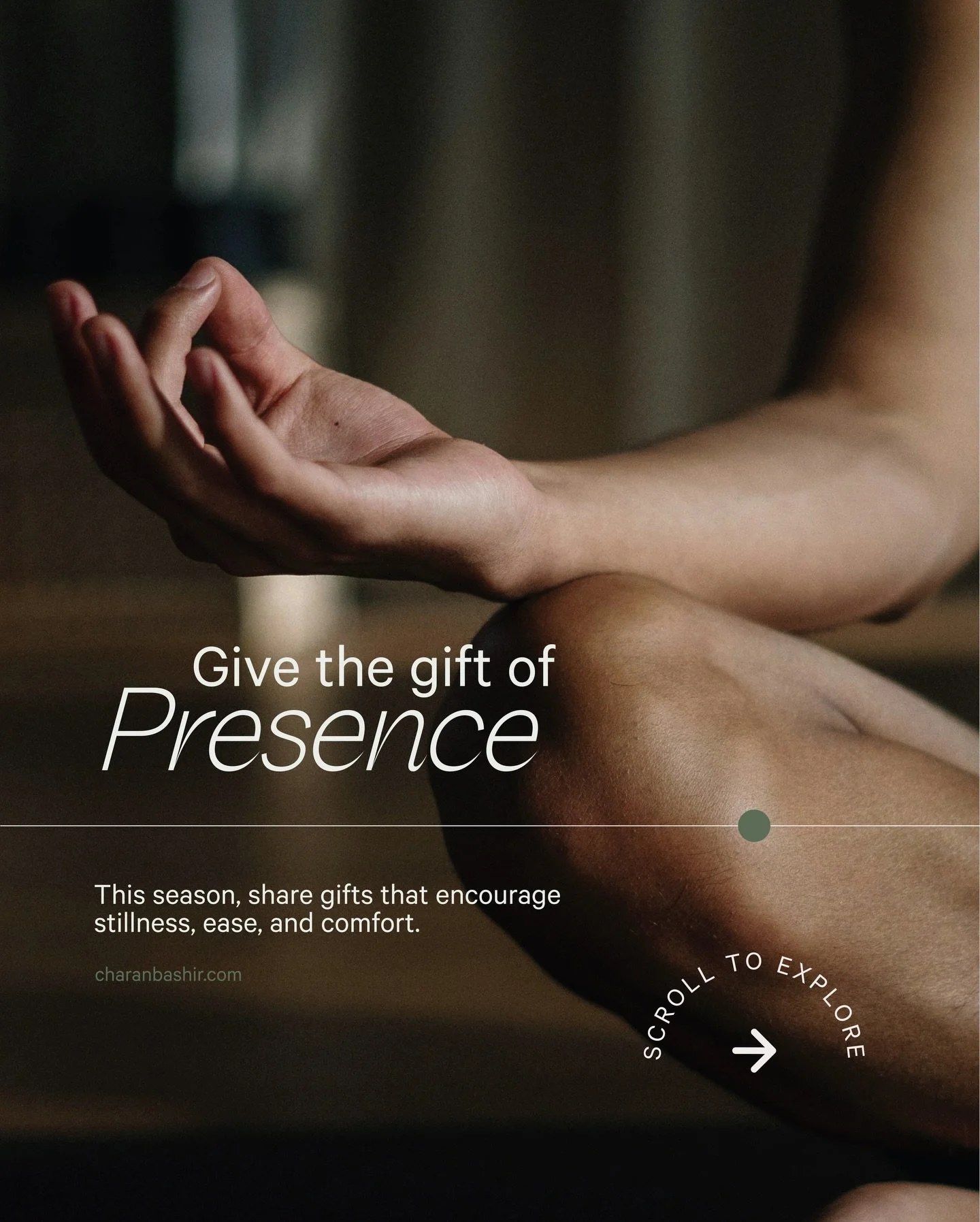
Presence is often supported by the things we surround ourselves with. I've partnered with two brands that create products to support everyday well-being. Explore the links below to view their catalogs and see what resonates with you.
Soothing, slightly weighted, pre-shrunk materials that provide comfort and calm as you take on your everyday.
Exceptionally crafted tools to support your meditation practice.
Follow me on Instagram










Continue Reading