The Challenge in Expansion

-
Growth often feels foreign before it feels right — Expansion asks us to move beyond that identity we have known and the unfamiliarity can register first as inauthenticity rather than progress.
The ego is the architect of the familiar — It constructs a sense of self from what has been, and it will often work to protect that construction, even when the person who we are becoming is asking to move beyond it.
You are a process, not a fixed point — The most sustainable expansion happens when we begin to identify with the ongoing unfolding of who we are, rather than the settled definition of who we have been.
Does becoming something new feel strange?
In the midst of growth, there is a notable discomfort — not the discomfort of failure or external challenge but the feeling that what you are becoming, even if positive, doesn’t quite match the version of yourself that you now know.
Maybe this rings true for you. When you start acting more in alignment with what you actually value and momentarily it felt performative somehow. When you began setting a boundary that was necessary, it felt somehow unfamiliar even though you were hearing it in your own voice. When you started to receive love, opportunity, and care in a way that exceeded what you had grown accustomed to, something inside had a reflection that it didn’t quite fit as seamlessly as you had imagined.
This discomfort is the very reason that people often return to the versions of themselves that they had been ready to outgrow — it feels more familiar and familiarity has a interesting way of masquerading as the truth.
Today is an invitation to inquire about what happens within us as people as we begin to expand, and to name the ways that the past has dictated our behaviors even when we have decided, consciously, to move beyond it.
The Process of Growth
To understand why expansion can, at times, feel so uncomfortable, it’s important to understand what is actually happening in the mind when we attempt to move forward.
In Breaking the Habit of Being Yourself, Dr. Joe Dispenza describes how much of what we call our personality is in fact a set of habituated patterns of thought, feeling, and behavior that have been reinforced over years (sometimes decades). These patterns become so deeply established that we begin to mistake them for who we are, when in truth they are simply what we have practiced the most consistently.
This assertion sits alongside a well established body of research on neuroplasticity — the brain’s capacity to form new neural pathways throughout our lives. The version of you that has been operating for the last decade is not a fixed structure, but rather a set of patterns that were once useful, deeply reinforced, and that are susceptible to change. When we begin to cultivate expansion or change, we challenge the minds ongoing predictive processing about what will come next and can even feel inauthentic. In some cases, this discomfort can be perceived as an invitation to update internal models of thought.
You might recognize this in your own life as:
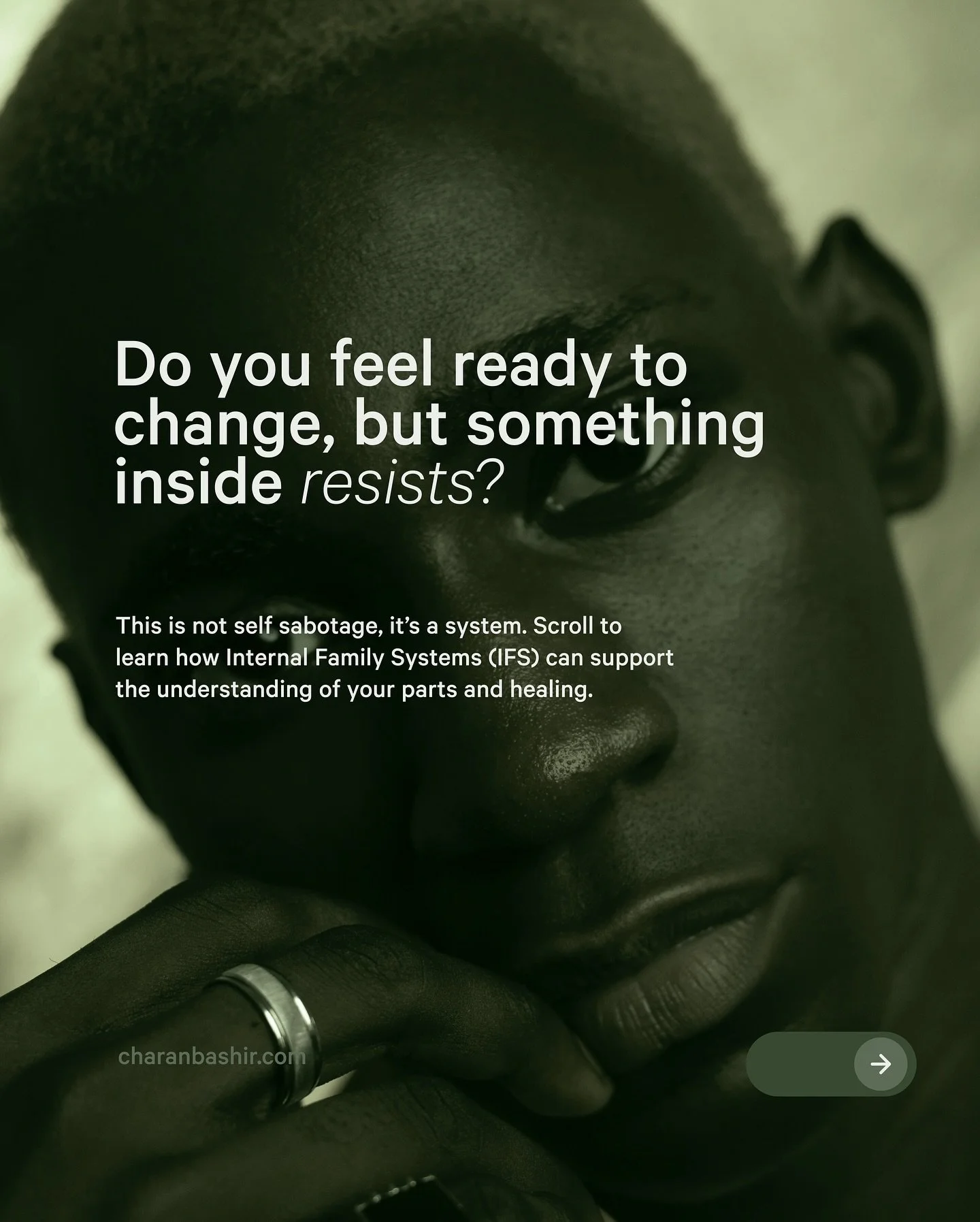
A quiet self sabotage that arises just as things begin to genuinely improve
A sense that positive change feels somehow undeserved, even when it has been earned
A feeling of being slightly disoriented in the aftermath of real growth, as if the ground has shifted underneath you
Doubts that arise not from evidence, but from the strangeness of a new version of yourself moving through your own life
Ego architecture
At the center of this experience being described here sits the Ego, not arrogance or self importance, but the constructed sense of self we have built out of memories, roles, beliefs, and internalized narratives. Rather than an inner enemy, the ego is the organizing principle that gives us a coherent sense of who we are.
The ego is oriented towards continuity, it draws its stability from the story it has already been telling and when we begin to expand beyond that story, the ego often experiences expansion as a kind of small death. Effectively, the version of us that the ego has organized itself around is being asked to make room for a version it has not met yet. This is why growth can often feel like a loss of self.
The work is not to eliminate the ego, but to develop a relationship with it that recognizes what is has done for you, while gently offering up reminders that the current story is not the whole story of you — there is more to narrate.
Off The Page: Actioning The Insights
Expanding, now.

Your practice this week
This week, your practice is to develop a more conscious relationship with the internal experience of expansion. The goal is to begin recognizing the strangeness of “new” as an opportunity to grow as opposed to being called back to a previous version of self. Take a look at the reflection questions and strategies below this week and notate what insights arise for you.
Reflection Questions:
Where in your life are you being asked to expand and what version of yourself needs to be released?
When you notice discomfort in expansion, does it feel misaligned or just unfamiliar?
What do you believe is possible if you allowed yourself to be a process rather than a fixed point?
Strategies:
Name the unfamiliar as unfamiliar, not reflexively inauthentic
When you notice the strange sensation that a new thought, behavior, or reality doesn’t quite fit what you know, objectively define it as it is. Unfamiliarity dissolves with repetition, inauthenticity does not.
Meet the ego with gratitude not judgment
When you notice a part of yourself resisting the growth you are moving towards, offer it a moment of internal acknowledgment (i.e. “Thank you for how you have kept me safe.”). This is a functional process, not a sentimental one. When offering up acknowledgment, parts of us that are subtly resistant can begin to soften — namely because they are being recognized as opposed to steamrolled.
Practice identifying with the unfolding, not the defined
At some point this week, notice the tendency to define yourself in fixed terms (i.e. I am someone who, I have always, I could never, etc). When you notice it, see if you can gently reframe towards the process (i.e. I am becoming, I am practicing, I am learning). Though a small linguistic pivot, this can be a fundamental and sustainable step towards loosening the egos grip on static definitions of who you are.
The unfamiliarity of who are becoming is not a warning to return to what you have known. This feeling is often the first indication that you are entering a new phase of life that the old self didn’t even know how to imagine. The freedom you have been reaching for is on the other side of fear.
Thank You
Thank you for joining me this week! I’m excited to keep sharing insights from my work, research, and personal journey with you.
Did something resonate with you? Curious about applying these strategies in your life? Or know someone who might benefit?
Use the link below to schedule a consultation or forward this newsletter to a friend!
Extras
Let your voice be heard
Click the button below to share anonymous feedback on Mindful Monday. This will support me in continually bringing aligned insights that you all can action in your day to day life to witness a shift.
● New Reads in The Library
Currently me and my book club are reading, “The Dream Hotel” by Laila Lalami — click the link below to add this to your library and read along with us!
A Listen for the Week
As I continue to consume relevant content, I will share it here to deepen knowledge, perspective, and inquiry on a variety of topics related to wellness. This week I am sharing a recent episode from the Hidden Brain podcast.

Changing our Mental Maps
As we move through the world, it’s easy to imagine we’re processing everything that happens around us and then deciding how to respond. But psychologist and neuroscientist Norman Farb says our brain actually navigate the world by coming up with mental maps — some helpful and others that can lead us astray.
Follow me on instagram




Explore the Shop
Passionate about wellness? I am currently partnered with two brands that focus on the creation of products to support individual wellness. Navigate the links below to learn more!
Power of Your Purchase — For qualifying purchases, a portion of the proceeds are donated to organizations focused on supporting mental health. Click here to learn more.
Soothing, slightly weighted, pre-shrunk materials that provide comfort and calm as you take on your everyday.
● Ads
Read More