Catching the Reflex

-
There is a space between stimulus and response — and this space reveals the possibility of choosing differently than we have before
Most of our reactivity is patterned, not personal — the similar nature of our responses often emerge from habits rather than awareness
Small interruptions create large shifts — the work is to develop the capacity to pause for one breath in the places where habitual reactions show up, and let something new become possible
What happens just before
Most of us might be familiar with the experience of watching ourselves do something we already know we are going to regret. The moment of feedback at work that activates a familiar defensiveness before the words have fully landed, or the conversation with a friend or family member that turns into a dynamic you have lived through numerous times.
It might be small, but maybe you notice a quiet recognition in these moments or even a bodily sensation that says, “I have been here before and I know how this ends.” This recognition is significant as it can reveal a powerful capacity that we have as people — noticing ourselves in the act of being ourselves. As Viktor Frankl famously notes:
Between stimulus and response there is a space. In that space is our power to choose our response. In our response lies our growth and our freedom.
Today, we are discussing the development of a more conscious relationship with the reflexes we have, and discovering what becomes possible when we learn to pause before a familiar pattern begins to play out.
The anatomy of a reaction
If we take a reflective pause, we notice that most of our daily reactions are not deliberate decisions — they are the output of well rehearsed automatic loops. As a stimulus arrives, the brain rapidly scans for pattern recognition based on prior experience and a behavior, thought, or emotion arises.
Think about which of these moments feel true in your life:
A facial expression that triggers a wave of defensiveness before a word has been spoken
A tone of voice that lands as criticism, regardless of the intent
A recurring topic with a person that you can already script in advance
In CBT, this is referred to as the automatic thought-feeling-behavior cycle. This cycle is fueled by interpretations of the present moment, shaped by patterns established long before this particular moment. The more that we notice them and introduce moments of awareness, we begin to recognize what pivots can show up to create new possibilities.
So what is this “space” that Viktor Frankl describes?
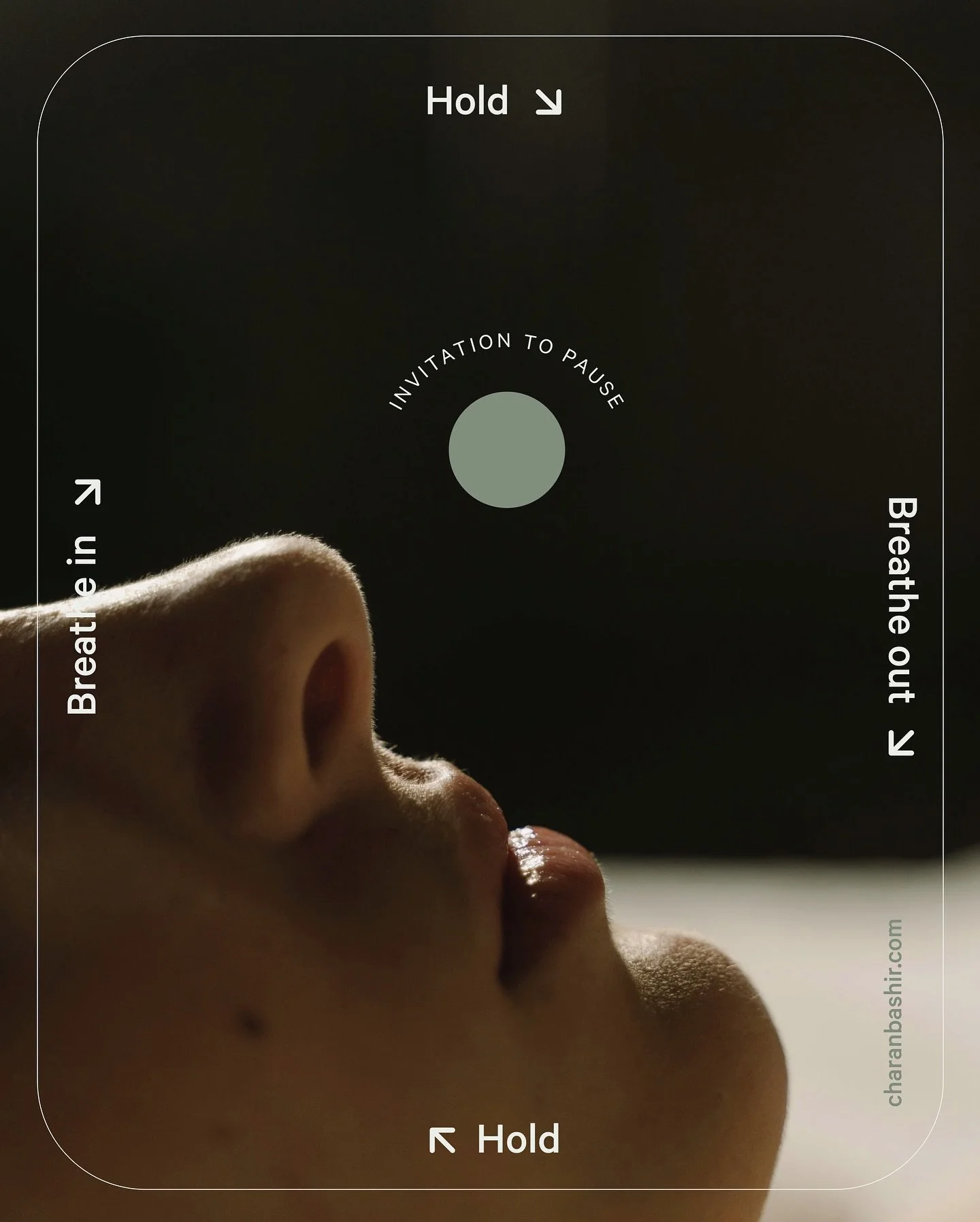
The space between stimulus and response is very small, maybe just as wide as one breath, but within it lies a notion that is honored across traditions:
Buddhism
The space is where mindfulness is born. Pausing is the practice of meeting experiences as they are without collapsing into reactivity.
Stoicism
Namely within the writings of Marcus Aurelius, the space is where freedom is located. Stoicism emphasizes that though we do not control what happens to us, we have the capacity to choose how we meet it.
Metacognition in Clinical Psychology
Metacognition is the practice of thinking about our thinking. With respect to this field of study, the space is where we develop the ability to observe our thoughts as mental events rather than absolute truths.
What these traditions converge upon is something simple and profound, awareness itself is the intervention. You do not have to change the thought, fix the feeling, or eliminate the reflex — you just have to begin with noticing without judgment as this begins to interrupt the automatic nature that has driven the behavioral loop over time.
Off The Page: Actioning The Insights
Discovering ways to pause this week

Your practice in noticing
The reflexes that show up most reliably in your life did not arrive from nowhere. For all of us, we learned how to exist in the world both experientially and contingent upon context. Take a look at the reflection questions and practices below to encourage a greater sense of awareness.
Reflection Questions:
Where in your life does the same scene tend to repeat?
What is the recognized reflex actually trying to do for you?
What would it mean to honor what the reflex is protecting while choosing a different response?
Practices:
Identify one recurring loop
Just one. Maybe it’s a similar argument, internal narrative, or reactive pattern. Name it out loud or even write it down and continue to place your awareness on how, where, and when it shows up.
Find the early signal in your body
Most reflexes announce themselves somatically before they become behavioral (i.e heart rate increase, shift in breath, tightening in the chest, tension in the jaw or shoulders). This week, see if you can locate it in it’s earliest stage. Becoming fluent in the language of your body is the practical work of catching reflexes before they fire.
Take space for one breath, and one question
When you notice the early signal that you have discovered, take one single conscious deep breath. Ask yourself, “What do I actually want to happen in this moment?” You may choose the same reflexive action, you may not, the point is not perfection but rather to gain greater agency over the choices you make as you navigate your life.
Thank You
Thank you for joining me this week! I’m excited to keep sharing insights from my work, research, and personal journey with you.
Did something resonate with you? Curious about applying these strategies in your life? Or know someone who might benefit?
Use the link below to schedule a consultation or forward this newsletter to a friend!
Extras
Let your voice be heard
Click the button below to share anonymous feedback on Mindful Monday. This will support me in continually bringing aligned insights that you all can action in your day to day life to witness a shift.
● New Reads in The Library
Currently me and my book club are reading, “The Five People You Meet in Heaven” by Mitch Albom. Click the link below to add this title you your library and read along with us!
A Listen for the Week
As I continue to consume relevant content, I will share it here to deepen knowledge and inquiry on a variety of topics related to wellness.

Radical Acceptance
“This week, in the second part of our conversation with behavioral scientist Dave Evans, we talk about radical acceptance. Dave shares why accepting reality as it is can be so difficult — and why it's an essential first step in building a meaningful life.”
Follow me on instagram





Explore the Shop
Passionate about wellness? I am currently partnered with two brands that focus on the creation of products to support individual wellness. Navigate the links below to learn more!
Soothing, slightly weighted, pre-shrunk materials that provide comfort and calm as you take on your everyday.
● Ads
Read More