Cultivating Motivation

-
Motivation is real, and inherently fluctuating — Waiting for it to show up is one of the most common reasons our goals lose momentum.
Discipline is the steady partner — Discipline and motivation are complementary forces, and a sustainable relationship with what you are trying to build asks for both.
Clarity precedes consistency — When we are clear about what is essential, the work of showing up becomes lighter, more focused, and more aligned.
Let’s be real — motivation is not constant
We have all felt the sensation of awaiting for motivation to arise internally — sometimes hours, weeks, or even years. We’ve stood at the edge of a goal, habit, project or vision, watching for the feeling that would tell us it is finally time to begin. Maybe, you have even considered that something might be wrong because, “If I was truly committed, wouldn’t the motivation be there?”
The truth is that motivation is a state and not a trait. It varies based upon our sleep, stress, environments, relationships, and the meaning that we connect to each passing moment.
Today, we lean in and release the expectation that motivation should be our constant companion and develop a more honest and sustainable relationship with the forces that actually carry us toward what we want.
Digging Deeper
At it’s core, motivation is the internal drive that initiates and sustains behavior toward a goal. To better support understanding, we can turn toward Self Determination Theory, developed by Deci and Ryan, to distinguish between two broad sources of motivation.
Intrinsic Motivation is the drive to engage in something because it is inherently interesting, meaningful, or aligned with our values. This arises when we are doing something that genuinely matters to us.
Extrinsic Motivation is the drive to engage in something for an external outcome, recognition, reward, avoidance of consequence, or to meet someone’s expectations. Research shows that this type of motivation is less sustainable and less satisfying over time.
In addition to delineating between types of motivation, Deci and Ryan also point out what fuels intrinsic motivation: autonomy (genuine choice), competence (feeling capable), and relatedness (feeling connected to others as we pursue what matters). When these needs are supported, motivation tends to flow more naturally. When they are not, motivation tends to drop, even for goals we deeply care about.
You might recognize these dynamics in your own life as:
A goal that energizes you when you are the one setting it, and depletes you when it feels imposed
A surge in momentum when you feel competent, and a quiet retreat when something starts to feel beyond your skill
A noticeable boost in follow through when someone is walking alongside you, and a quiet loss of steam when you are doing in alone
Understanding these factors matters because so much of what gets called a motivation problem is actually a misalignment problem, a competence problem, or a connection problem. We can shift from asking “Am I motivated or not?” to “What conditions tend to support me and how can I build more of those into my life?”
Your quiet and steady partner — Discipline
Discipline is the force that actually carries us through to meaningful achievement. It’s important to note that discipline is not the harsh, militaristic willpower we sometimes imagine. Discipline is the practice of showing up for what matters to us (after we discover what truly matters), even when the feeling we experienced or expected is not there. It is the steadiness that carries us through when motivation dips, and the structure that protects what we care about from the noise of every other thing competing for our attention.
Motivation and discipline are partners, where motivation starts a thing, discipline tends to finish it. A useful framework here that clarifies how discipline becomes sustainable is drawn from one of my favorite reads, Essentialism by Greg McKeown.
McKeown’s central insight is that disciplined action becomes far easier when we are clear about what is actually essential. When we try to do everything, our energy is fragmented. When we narrow our attention to what is genuinely most important, discipline begins to feel less like a fight against ourselves and more like a clear act of priority.
Off The Page: Actioning The Insights
Seeking the essential

Your practice this week
This week, the practice is to stop waiting for motivation to consistently arrive, and to begin building the conditions and habits that allow you to keep moving toward what you care about. Take a look at the reflection questions and strategies below to encourage you this week and take note of what arises for you in practice.
Reflection Questions:
When you feel most motivated, what conditions tend to be in place?
Are the goals you are working towards actually yours?
Where might competence be the actual issue, rather than motivation?
Strategies:
Clarify what is essential
Choose one goal, project, vision, or habit you are currently working toward to work with this week for practice. You are not abandoning other things, you are honing your focus. Take note of what changes for you when you clarify your target and work only there for a moment.
Commit to one small, repeatable action
Identify an action that moves you toward your goal and repeat it daily, regardless of how you are feeling about it. Don’t think about summoning motivation but rather practicing how to show up for yourself each day in a small and accomplishable way.
Build accountability through community
Share what you are working on with a trusted person who can walk alongside you. As we explored in The Healing Power of Community, the nervous system regulates and grows in the presence of safe, attuned others, and the same principle applies to our goals. Tell someone, invite them to check in on you, offer to do the same for them.
Bonus: The power of a good playlist
I deeply love music as a way to put me in the mindset of different tasks as I am cultivating focus. Check out the links below to explore my playlists on Apple Music curated for specific intentions.
The work is to build a life where discipline feels like devotion and not punishment. The steady act of showing up for yourself, even imperfectly, is a form of love for the person you are becoming.
Thank You
Thank you for joining me this week! I’m excited to keep sharing insights from my work, research, and personal journey with you.
Did something resonate with you? Curious about applying these strategies in your life? Or know someone who might benefit?
Use the link below to schedule a consultation or forward this newsletter to a friend!
Extras
Let your voice be heard
Click the button below to share anonymous feedback on Mindful Monday. This will support me in continually bringing aligned insights that you all can action in your day to day life to witness a shift.
● New Reads in The Library
Currently me and my book club are reading, “Happier Hour” by Cassie Holmes, PhD. Click the link below to add this title you your library and read along with us!
A Listen for the Week
As I continue to consume relevant content, I will share it here to deepen knowledge, perspective, and inquiry on a variety of topics related to wellness. This week I am sharing a recent episode from the podcast Hidden Brain, hosted by Shankar Vedantam.

Stepping Out of the Shadows
From Hidden Brain — Why does one bad experience have the power to overshadow an otherwise good day? Psychologist Alison Ledgerwood explores the negativity bias, the deeply human tendency to hold on to what went wrong and overlook what went right.
Support My Community
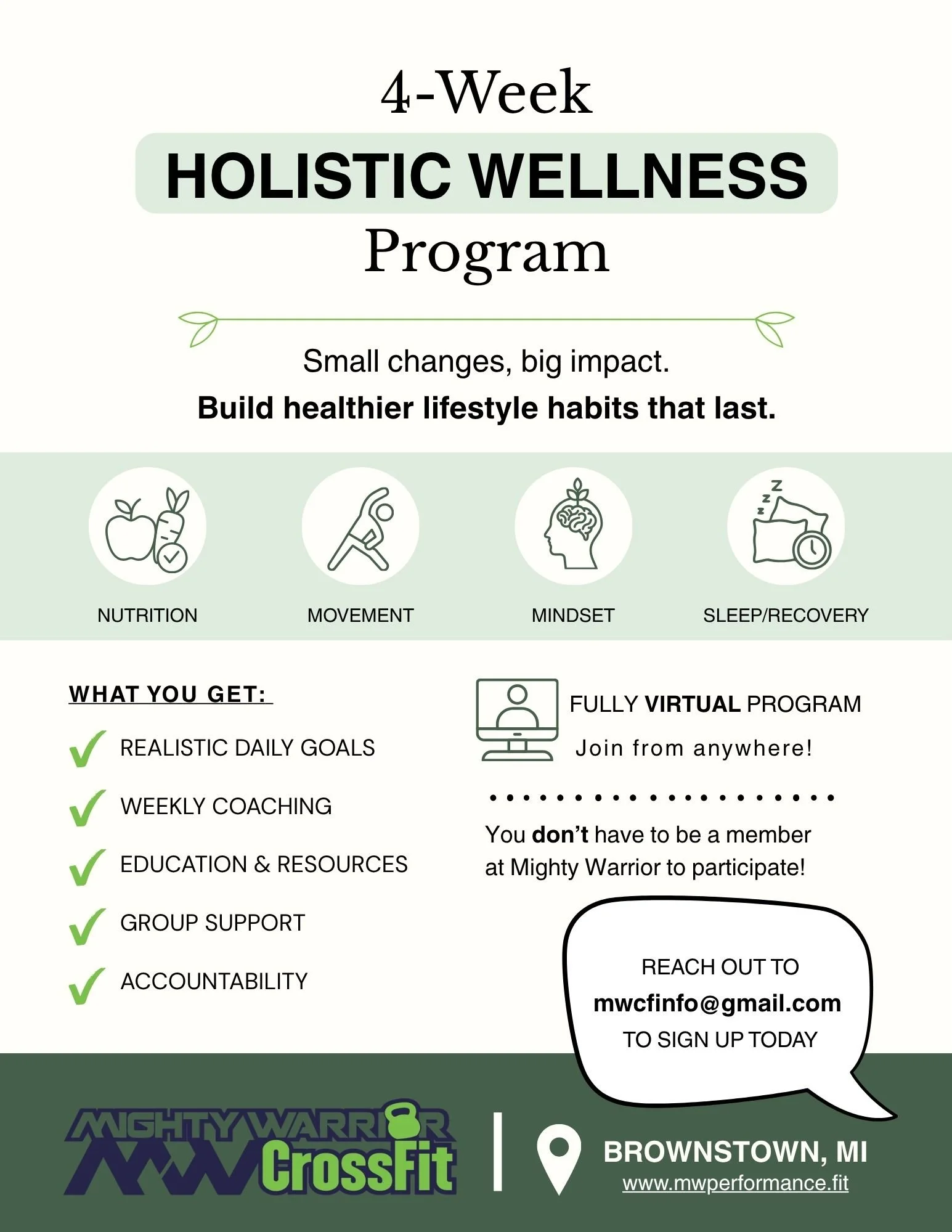
Jaycie Gauci, LMSW, CCATP is a respected colleague, practice owner, and friend of mine who is currently hosting a 4 Week Holistic Wellness Program for individuals looking to build a healthier lifestyle with support!
Check out the information below to learn more!
Follow me on instagram





Explore the Shop
Passionate about wellness? I am currently partnered with two brands that focus on the creation of products to support individual wellness. Navigate the links below to learn more!
Power of Your Purchase — For qualifying purchases, a portion of the proceeds are donated to organizations focused on supporting mental health. Click here to learn more.
Soothing, slightly weighted, pre-shrunk materials that provide comfort and calm as you take on your everyday.
● Ads
Read More