Our Relationship with Pain

-
Pain shapes us, often in ways that ask us to shut down — The strategies that once kept us safe linger once the threat has passed, quietly narrowing the lives we are now living.
Protective Parts are not the enemy — They are the reason we made it through adversity. The work is to honor what they have done, while inviting them to consider if their role still fits the current context.
Sometime the strategies we use to keep pain away end up bringing it closer — When we always brace for hurt, we subtly recreate the same dynamics we were attempting to avoid.
What we might be holding
Inside, most of us carry a quiet promise we made to ourselves after something difficult occured (i.e. “I will not let this happen again, I won’t be that vulnerable, I will see it coming next time.”)
These promises are often unspoken, but they were made by a version of ourselves who was only doing what was required to navigate what was in front of them. Though protected in the moment, we might come to notice that the same protections that were constructed for our benefit are now keeping us small. The walls that gave us a refuge are now keeping out the very experiences that could potentially heal us.
In my work (and personal life), I see how pain can transform people — sometimes in ways that deepen their experience in life and at other times, in ways that close people off from the world around them. Today, we bring our attention to the ways pain has shaped how we move through the world and consider if some protection strategies might be ready to be released in service of something greater.
When pain encourages you to brace yourself for the future
When discussing how pain can leave such lasting imprints, I like to refer to Internal Family Systems (IFS). Developed by Dr. Richard Schwartz, this framework offers up compassion as we seek to understand what happens inside us in the aftermath of challenge.
According to IFS, we all have multiple parts of ourselves, each with its own perspective, history, and role. Some parts hold the more vulnerable, wounded experiences from our earlier lives, while others organized themselves around shielding those wounded parts from further harm. These protective parts show up in a myriad of ways like:
Hypervigilance — In relationships, we might continually scan for signs that someone is pulling away.
Performances — In our lives we might stay endlessly busy so that we never have to sit still with what is beneath the surface.
Withdrawal — We may take a step back from intimacy, as closeness can represent an opportunity for the pain of the past to resurface yet again.
These are not flaws, they are signs that parts of you are showing up in defense of you, parts that had to deal with too much, too fast, too soon. Before we work to tell these protectors that we are ready to rid of them, it is valuable to first understand that they serve a protective role with you in mind (even if not pertinent to present day circumstances).
Can protective strategies bring pain closer?
This is where our work becomes more nuanced, and more important.
Protective parts, by nature, are organized around a belief about the world. (i.e. People will leave, I will be to much, It is not safe to have needs) These beliefs were formed in periods when we were pushed well beyond our window of tolerance, and made sense in the context where they originated.
But, protective parts are not always aware that time has passed and that circumstances are different. They might not know that the people currently in your life are not the people who hurt you, but rather still running on the old software (metaphorically speaking) that was installed during the original wound, scanning the present moment for evidence of the past. Here is a truth that I see play out again and again in my own clinical work: When a protective part is working hard enough, it can begin to recreate the very pain it was built to prevent.
The Impact of Confirmation Bias — The hypervigilance that was meant to detect rejection early can create a felt tension in relationships that, over time, becomes the very distance you were attempting to avoid. The withdrawal that was meant to prevent abandonment can communicate disinterest, eventually leading the other person to take a step back from you.
From a CBT perspective, this is referenced as confirmation bias — the mind’s tendency to seek out and weigh evidence that confirms what it already believes. A part of us that believes the world is unsafe will, unconsciously, attend to whatever data supports that belief, while filtering out evidence that contradicts it.
This recognition is significant, as the part of you that has been committed to not getting hurt again may be participating in a cycle that keeps that particular hurt circulating in your life.
Off The Page: Actioning The Insights
Getting well acquainted with your protectors

Your practice this week
This week, the practice is to begin developing a more conscious and compassionate relationship with the protective parts of you that have been working overtime. The goal is to meet and understand them, not to push them away or attempt to shame yourself into showing up differently. Reference the reflection questions and strategies below and note what comes up in your experience.
Reflection Questions
What part of you tends to show up most reliably when you are scared, hurt, or uncertain?
What is this part protecting you from?
What would it mean, do, or shift, to thank this part for keeping you safe while recognizing that safety can be created in new ways?
Strategies
Notice the protector at work
When you feel yourself reaching for a familiar pattern of protection this week, see if you can pause and silently say to yourself, “I see you. Thank you for trying to keep me safe.” Like most therapeutic strategies, becoming aware of your relationship to something is a formative first step in beginning to cultivate change.
Get curious about what this part is afraid of
With genuine warmth, ask this part of you: “What are you worried would happen if you stopped doing this?” The answer may show up as words, images, or body sensations. Notate what your answer is to this question. This is not about forcing, it’s about opening to insights that your mind might already have for you. It’s important to notate that protective parts often exist in fear, so forcing an answer will only create greater tension.
Test one small piece of new information
If you notice that your protective part(s) are operating from a belief that may have been true in the past, but is no longer, consider offering it up new information. “This person is not the one who hurt me. This room is indeed safe. I have more resources to support me today than I had back then.” Over time, with consistency, protective parts can build trust in the Self in ways that resemble the time it takes for us to build grounded trust in other people in our lives.
When our inner protectors learn that they no longer have to work so hard, what we discover beneath them is not weakness — but rather the loving capacity to meet life as it is and respond to it with intentionality.
Thank You
Thank you for joining me this week! I’m excited to keep sharing insights from my work, research, and personal journey with you.
Did something resonate with you? Curious about applying these strategies in your life? Or know someone who might benefit?
Use the link below to schedule a consultation or forward this newsletter to a friend!
Extras
Let your voice be heard
Click the button below to share anonymous feedback on Mindful Monday. This will support me in continually bringing aligned insights that you all can action in your day to day life to witness a shift.
● New Reads in The Library
Currently me and my book club are reading, “Happier Hour” by Cassie Holmes, PhD. Click the link below to add this title you your library and read along with us!
A Listen for the Week
As I continue to consume relevant content, I will share it here to deepen knowledge, perspective, and inquiry on a variety of topics related to wellness. This week I am sharing a recent episode from the podcast Hidden Brain, hosted by Shankar Vedantam.
Who Are You, Really?
From Hidden Brain — “You’re not the same person with your friends as you are with your co-workers or your kids. This week, political scientist Eric Oliver explores why we often feel divided within ourselves, and how we can learn to live more peacefully within those contradictions.”
Support My Community
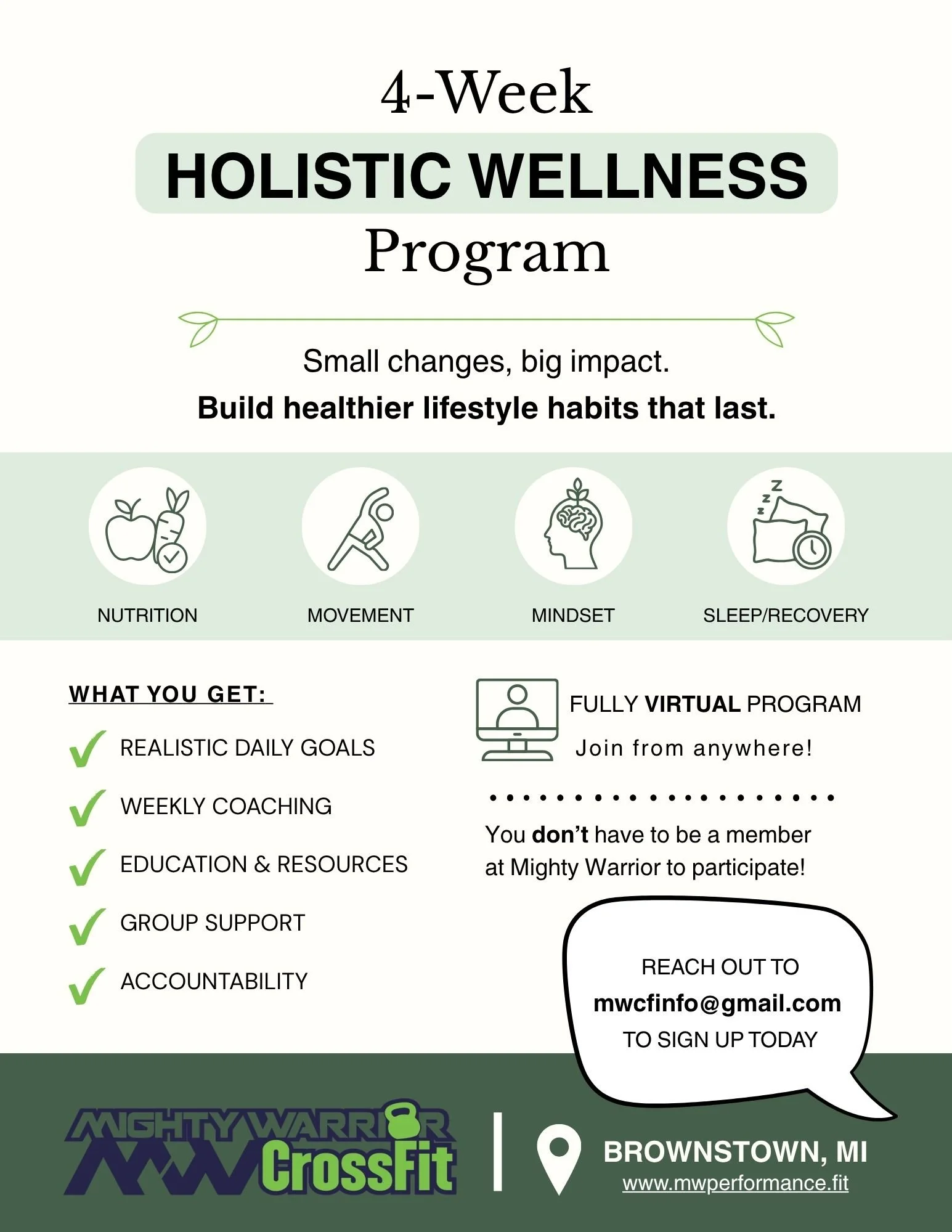
Jaycie Gauci, LMSW, CCATP is a respected colleague, practice owner, and friend of mine who is currently hosting a 4 Week Holistic Wellness Program for individuals looking to build a healthier lifestyle with support!
Check out the information below to learn more!
Follow me on instagram






Explore the Shop
Passionate about wellness? I am currently partnered with two brands that focus on the creation of products to support individual wellness. Navigate the links below to learn more!
Soothing, slightly weighted, pre-shrunk materials that provide comfort and calm as you take on your everyday.
● Ads
Read More